Insight
The Risks of Using the Wrong Type of Breathwork
July 1, 2026 · Evan Gill
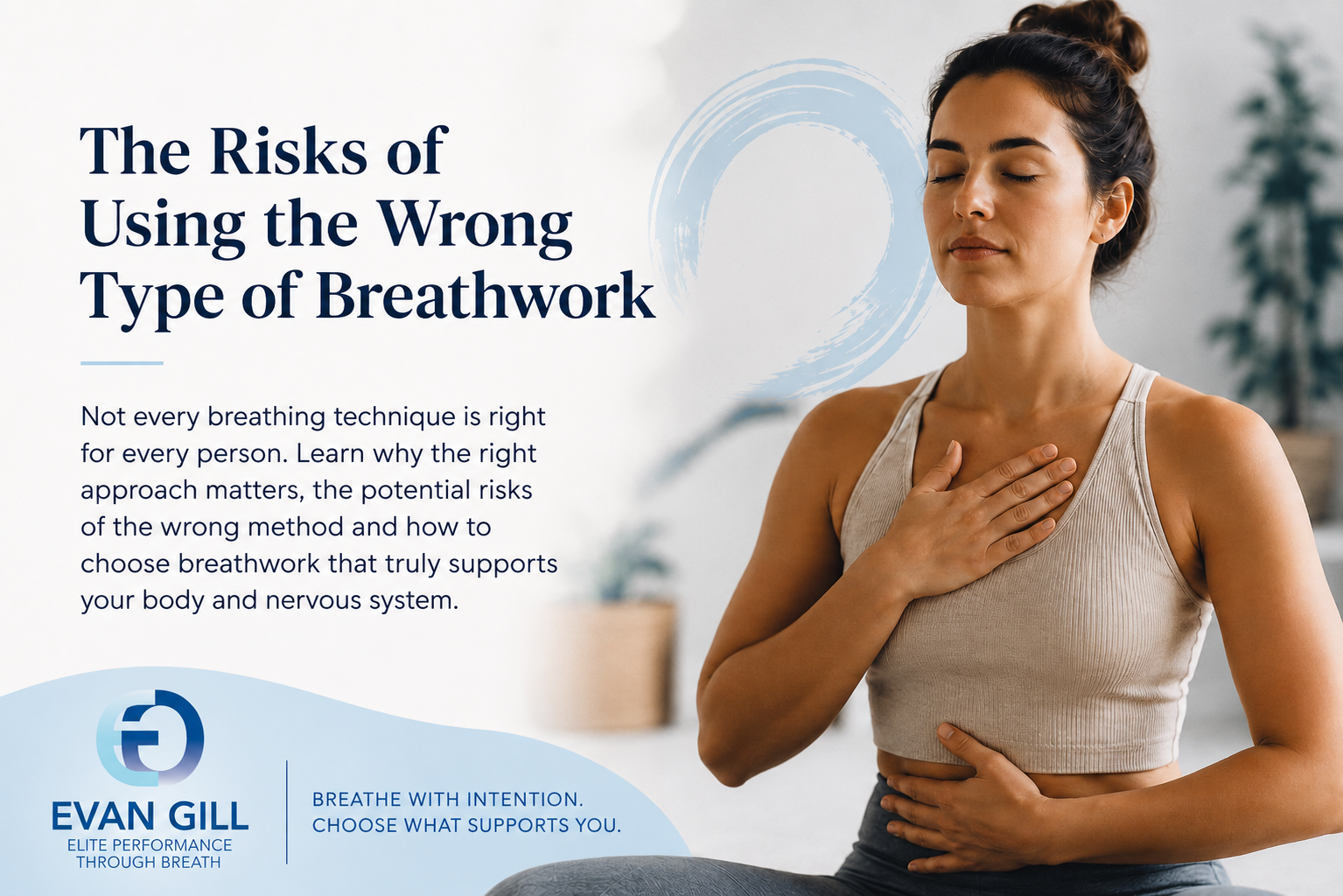
Breathwork can be a powerful tool for calming the nervous system, improving focus and supporting stress recovery, but not every technique is right for every person. This article explores why the type of breathwork you choose matters, the risks of using the wrong approach and why safe, appropriate guidance can make all the difference.
The Risks of Using the Wrong Type of Breathwork
Breathwork can be a powerful tool for calming the nervous system, improving focus, supporting emotional regulation and helping the body recover from stress. But like any tool, it needs to be used in the right way, at the right time, for the right person.
Not all breathwork is the same.
Some techniques are designed to calm the body down. Some are designed to increase energy. Some are used for emotional release. Others can create intense physical sensations, altered states or strong nervous system activation.
That is why using the wrong type of breathwork can sometimes do more harm than good.
## Breathwork is not one size fits all
A slow, gentle breathing practice may help someone feel calm, grounded and safe.
A fast, intense breathing practice may help another person access emotion, energy or release.
But if someone is already anxious, overwhelmed, sleep deprived, highly stressed or dealing with certain health conditions, an intense breathing technique may push the body further into stress rather than helping it regulate.
The issue is not that breathwork is bad.
The issue is using the wrong method for the person, their nervous system, their health history or their current emotional state.
## It can increase anxiety instead of reducing it
Many people come to breathwork because they want to feel calmer.
But some techniques, especially fast breathing, deep over-breathing or long breath holds, can create sensations such as tingling, dizziness, tightness in the chest, racing thoughts or lightheadedness.
For someone who already experiences anxiety or panic, those sensations can feel frightening. Instead of calming the nervous system, the practice may trigger fear, panic or a sense of losing control.
This is why slower, steadier breathing is often a safer starting point for people who are highly stressed or anxious.
## It can place unnecessary stress on the body
Certain breathwork practices can change carbon dioxide and oxygen levels in the body. This can create strong physical effects, including dizziness, numbness, shaking, temperature changes, visual changes or faintness.
For healthy people in a safe environment, these sensations may pass quickly. But for people with cardiovascular issues, blood pressure concerns, pregnancy, neurological conditions, respiratory conditions or a history of fainting, some practices may not be appropriate without medical guidance.
Breathwork should support the body, not force it into a state it is not ready for.
## Breath holds can be risky in the wrong setting
Breath holds are used in many different breathing systems. When used carefully and appropriately, they can help build awareness and control.
But breath holds should never be practised in water, while driving, while operating machinery, standing unsupported or in any situation where fainting could cause harm.
Some people push breath holds too far because they think longer means better. That mindset can be dangerous. The goal of breathwork is not to prove toughness. The goal is to work with the body safely.
## It can bring up emotions before someone is ready
Breathwork can sometimes unlock emotion. For some people, that can feel healing and helpful. For others, especially those with unresolved trauma or a history of emotional overwhelm, intense breathwork can bring up more than they are prepared to process.
This does not mean those people cannot benefit from breathwork. It means the approach needs to be gentle, trauma aware and properly guided.
A good practitioner will not force intensity. They will help the person stay connected, grounded and in choice throughout the experience.
## The wrong technique can create the wrong state
One of the biggest misunderstandings about breathwork is thinking that all breathing techniques are for relaxation.
They are not.
Some techniques are down-regulating. They help calm the body, slow the system and support rest.
Some techniques are up-regulating. They increase energy, alertness and activation.
Some techniques are balancing. They help create steadiness, focus and control.
If someone uses an energising technique before bed, they may struggle to sleep. If someone uses an intense technique before a stressful meeting, they may feel more activated. If someone uses a calming technique when they need alert performance, they may feel too relaxed or flat.
The right breathwork depends on the outcome you want.
## Intensity is not always better
There is a growing belief that breathwork needs to be dramatic to be effective.
Big releases.
Strong sensations.
Emotional breakthroughs.
Heavy breathing.
Long holds.
But some of the most effective breathwork is simple, quiet and almost boring.
A few minutes of slow nasal breathing.
A longer exhale.
A steady rhythm.
A pause before reacting.
A calm reset before a difficult conversation.
The nervous system often responds best to consistency, not intensity.
## Why proper guidance matters
A qualified breathwork practitioner should help choose the right technique based on the person in front of them.
They should consider stress levels, medical history, emotional readiness, goals, environment and safety.
They should also know when not to use certain practices.
Good breathwork is not about pushing someone into an experience. It is about helping them build awareness, control and trust in their own body.
## A safer way to begin
For most people, the safest place to start is with simple, gentle breathing.
Try breathing in through the nose for 3 or 4 seconds, then breathing out slowly for 5 or 6 seconds.
Keep the breath easy. Keep the body relaxed. Do not force the inhale. Do not strain the exhale. Stop if you feel dizzy, uncomfortable or unsafe.
This kind of breathing is simple, but it can be incredibly effective for calming the nervous system and creating a sense of control.
## Final thought
Breathwork can be life changing when it is used well.
But the wrong technique at the wrong time can create unnecessary stress, discomfort or risk.
The key is not to chase the most intense method. The key is to choose the right method for your body, your nervous system and your goal.
Breathwork should leave you feeling more connected, more aware and more in control.
Not overwhelmed.
Not pushed.
Not unsafe.
Used properly, your breath can be one of the most powerful tools you have.