Insight
Sympathetic and Parasympathetic States, Without the Jargon
June 3, 2026 · Evan Gill
Your body has different operating modes. High performance comes from flexibility, not from being calm all the time.
Your nervous system helps you respond to life through different operating states.
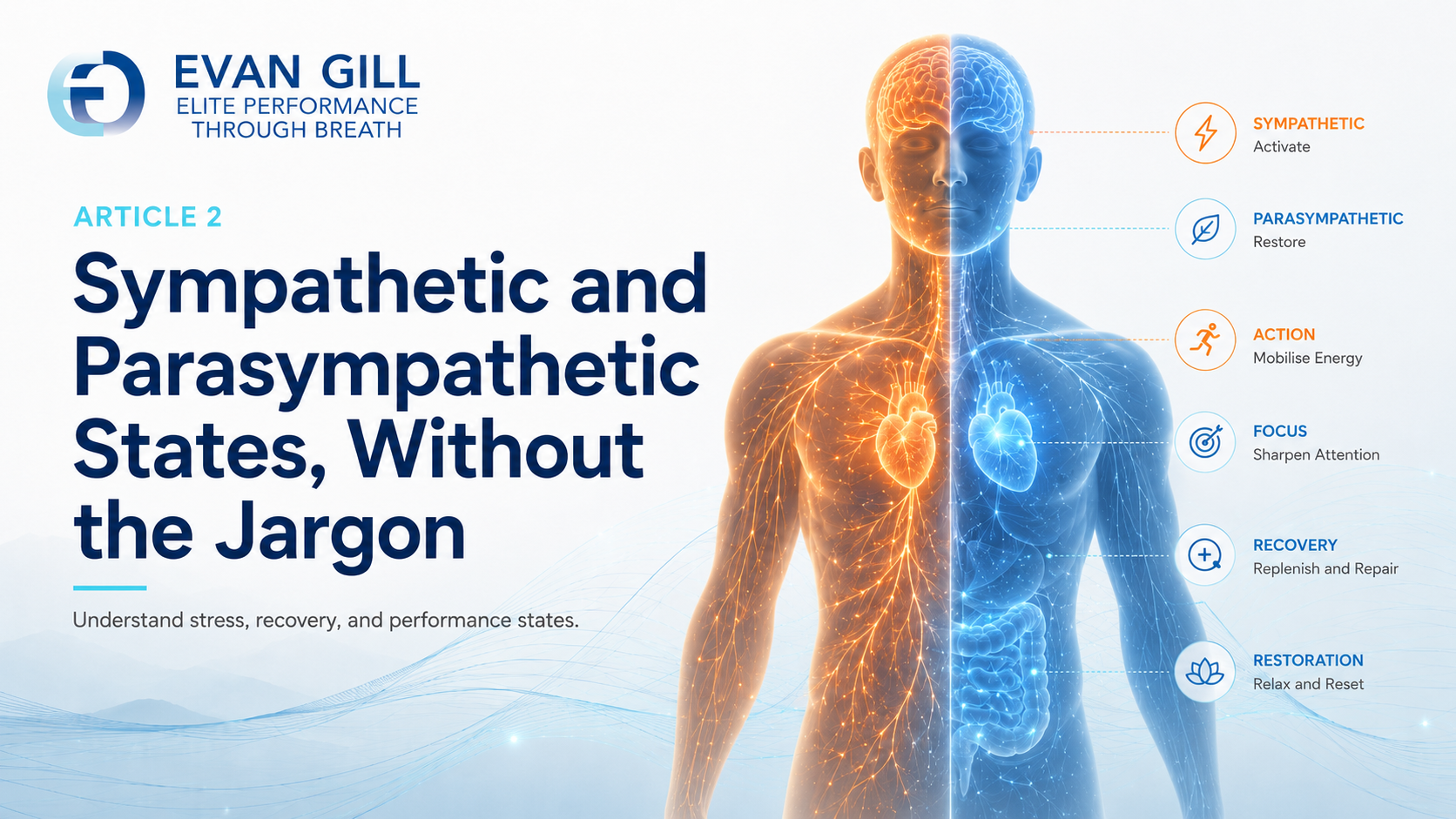
The sympathetic branch is often linked with action. It helps you mobilise energy, focus attention, increase heart rate, and respond to challenge. This is useful before a presentation, sales call, workout, or difficult conversation.
The parasympathetic branch is often linked with recovery. It supports digestion, repair, rest, and restoration. This is useful after work, before sleep, during recovery, and whenever the body needs to downshift.
The problem is not sympathetic activation. You need it to perform. The problem is getting stuck there.
Many high performers spend the day pushing, solving, leading, deciding, and reacting. Their system stays switched on long after the moment has passed. They may finish work exhausted but still feel wired. They may lie down at night but struggle to sleep. They may have time off but still feel mentally busy.
This is where nervous system training becomes valuable.
The goal is not to remove pressure. The goal is to improve your ability to move between states. Up when you need energy. Down when you need recovery. Steady when you need clarity.
Breathwork gives you a practical way to train that flexibility. Faster or more activating techniques may lift energy, but they are not suitable for every person or every moment. Slower breathing, nasal breathing, gentle breath awareness, and longer exhales are often used when the aim is to settle the body.
A useful question is not “Am I calm?” The better question is “Can I access the state I need for this moment?”
Try this
Use this simple state check:
• Green: calm, clear, connected, steady
• Amber: tense, rushed, alert, distracted
• Red: overwhelmed, reactive, panicked, shut down
Name your current state. Then choose one small action that supports the state you want next.
Reflection
Where do you most often get stuck: switched on, switched off, or swinging between the two?
Safety note
Do not force a state change. Start gently and work within your capacity.