Insight
Nasal Breathing: The Small Habit That Changes Everything
June 11, 2026 · Evan Gill
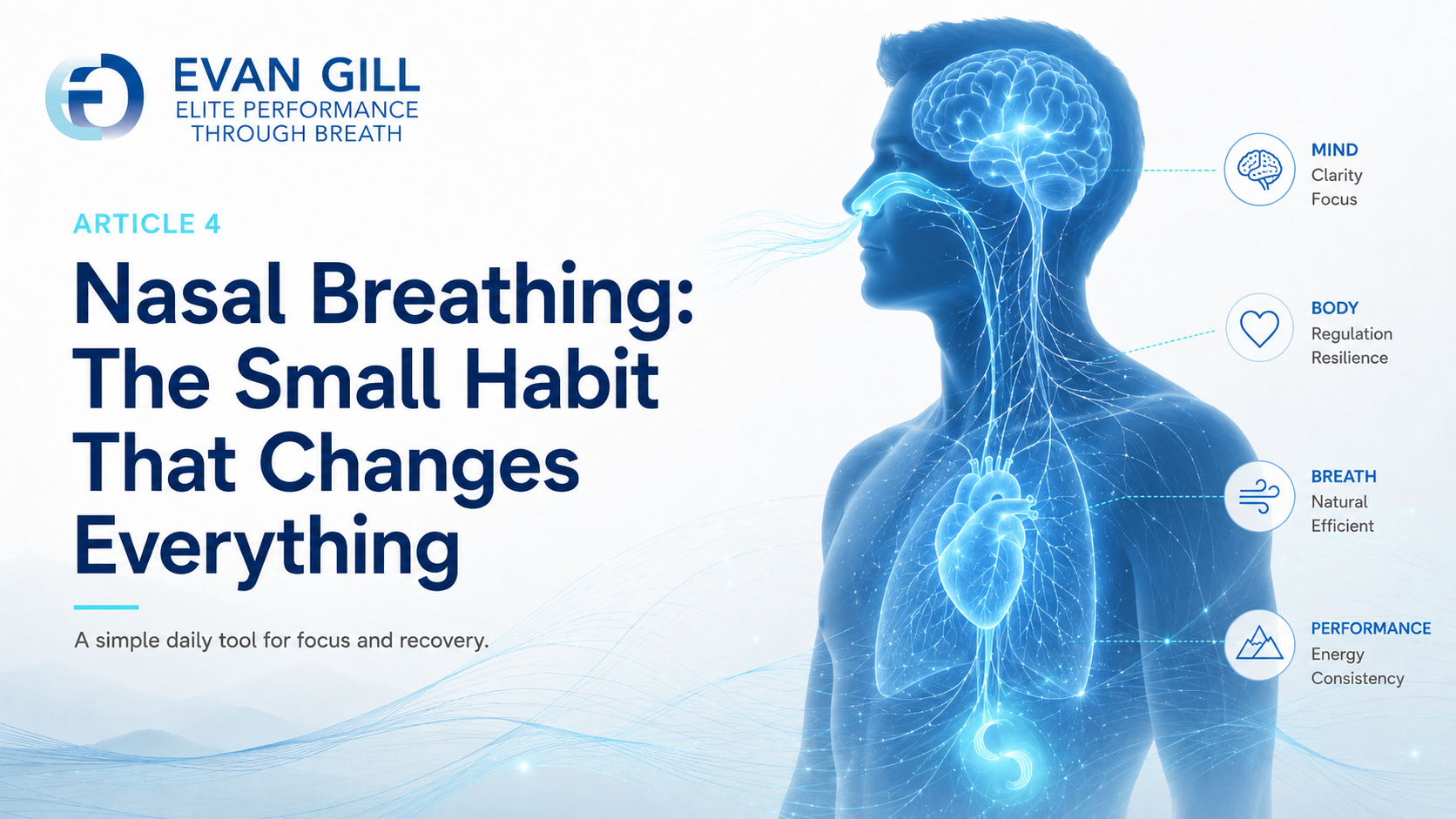
Nasal breathing is one of the simplest ways to make your breathing slower, quieter, and more controlled.
A powerful starting point in breathwork is simple: breathe through your nose when it is comfortable and appropriate.
Nasal breathing naturally encourages a slower and more controlled breathing pattern. It can help you become more aware of your breath and reduce the tendency to over breathe during low intensity moments.
This matters because many people breathe as if they are always rushing. They breathe high, fast, and through the mouth, even when sitting at a desk. Over time, that can reinforce a sense of urgency in the body.
Nasal breathing is useful because it gives the breath a little more structure. The nose adds resistance. The breath often becomes quieter. The body gets a chance to settle.
This does not mean mouth breathing is always wrong. During intense exercise, blocked nasal passages, illness, or certain medical conditions, mouth breathing may happen naturally. The goal is not perfection. The goal is awareness and choice.
For high performers, nasal breathing can be used as a reset during the day. Between meetings. While walking. While reading. During warm-ups. On the commute home. Before bed.
The question is simple: “Can I return to nasal breathing here?”
If yes, return gently.
Try this
Set a 3 minute timer.
Breathe only through your nose if comfortable. Keep the breath light, quiet, and smooth. Relax your jaw. Let the tongue rest gently on the roof of the mouth. Notice what changes.
Reflection
During the day, when do you most often shift into mouth breathing?
Safety note
If nasal breathing feels uncomfortable, restricted, or stressful, do not force it. Use a gentle approach and seek medical advice for ongoing nasal obstruction or breathing concerns.