Insight
How to Use Breathwork After Stress
July 18, 2026 · Evan Gill
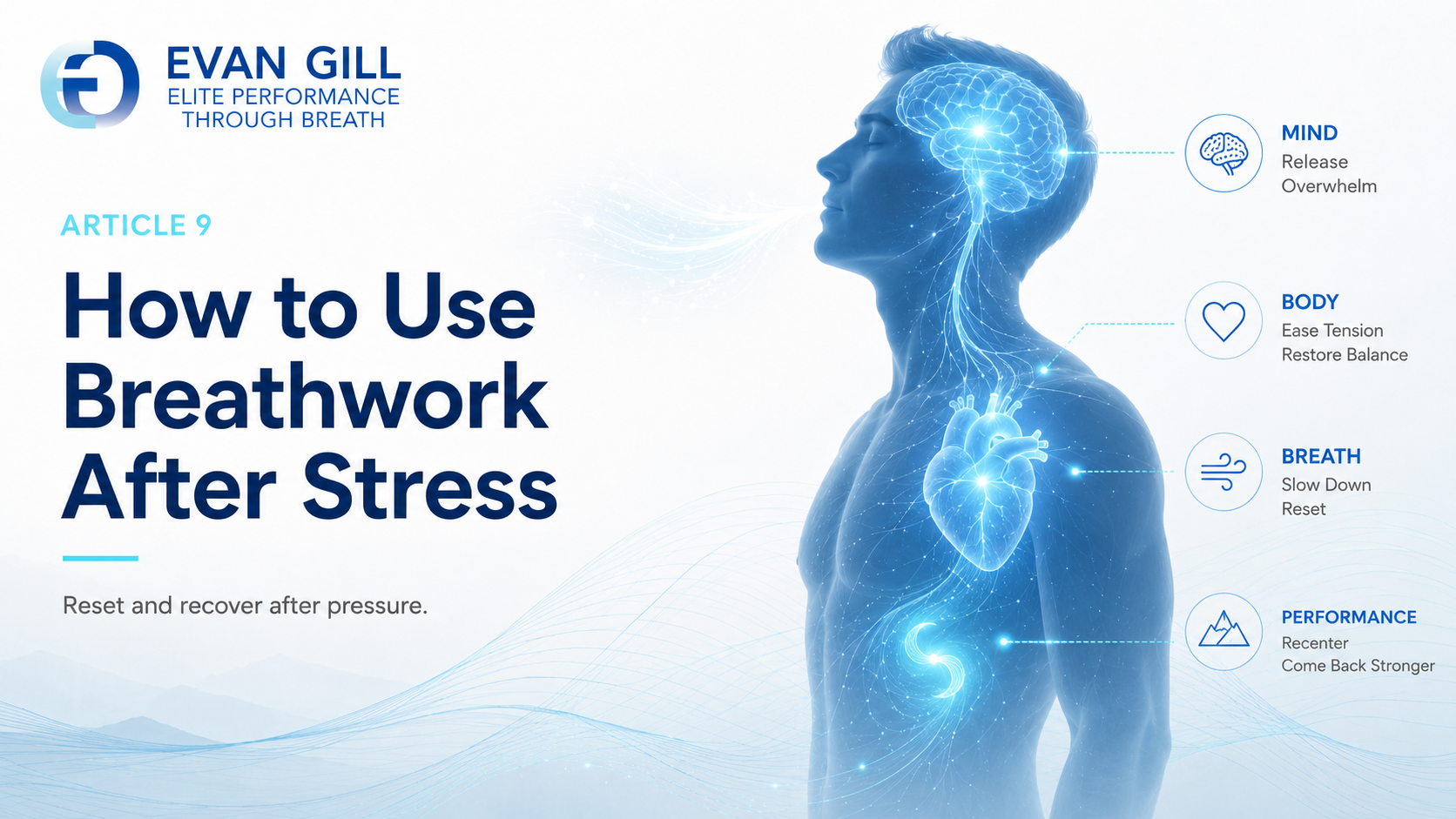
After stress, your body needs a clear signal that the moment is over.
Stress does not always end when the event ends.
You may leave the meeting, finish the call, close the laptop, or get home from work, but your body may still be acting as if the pressure is happening. Your heart rate may stay elevated. Your thoughts may replay the conversation. Your jaw may stay tight. Your breathing may remain shallow.
This is why recovery needs to be intentional.
A post-stress breathwork practice helps create a line between what happened and what happens next.
It does not erase the event. It tells the body that it can begin to downshift.
This is especially important for leaders and business owners. If you carry every stressful moment into the next one, you lose clarity. You may bring tension home. You may react to people who did not create the stress. You may struggle to sleep.
A recovery breath does not need to be long. It needs to be consistent.
Use it after difficult conversations, high pressure decisions, intense training, travel, conflict, or a long day of problem solving.
Try this
The After Stress Reset:
1. Sit or stand comfortably.
2. Exhale fully but gently.
3. Inhale through the nose for 3 to 4 seconds.
4. Exhale for 5 to 6 seconds.
5. Repeat for 3 minutes.
6. On each exhale, release one area of tension.
Reflection
What stress do you often carry into the next part of your day?
Safety note
If stress feels overwhelming or traumatic, keep practices gentle. Breathwork can bring up strong sensations or emotions for some people. Work with qualified support where needed.